Showing posts with label addiction. Show all posts

Friday, June 27, 2014

I AM 22 YEARS SOBER TODAY, SO I WROTE A POST CALLED "GETTING YOUR CHARACTER HIGH: WRITING ABOUT ADDICTION"


Around 9:37 am today I am  22 years clean and sober. Yep. 22 years. What the hell is that? Crazy huh. (I’ve blogged on this subject a lot over the years, such as here and here.)  I like to think the hell I put myself through helped me gain the perseverance to run marathons and write books, despite all the forces in the universe trying to stop me.

Substance abuse and addiction play a major role in many of my books. On the Lips of Children features a crystal meth addict living in a drug-smuggling tunnel who snorts bath salts. STRAY is loosely based on my experience working as a therapist in a treatment center.

And my latest release, MILK-BLOOD, features heroin addiction in a way I am pretty confident you have never seen before.

None of my books preach or try to deny anyone the choice of their drug or drink. Hell, if I could get away with it, I’d be drinking right now. But I can’t. One shot of vodka and I’m drinking for days and then using any substance I can get my hands on. My insides bleed out of my ass (literally). Strange days indeed, and the glory is, writers can make their characters bleed out just the same.

So, for my 22 year sobriety anniversary, I’m putting out a post called:

“Getting Your Character High: Writing About Addiction”
Here we go…

Torture your protagonist. Toss them into a pot of boiling water, and make the best parts come bubbling up to the top. There are lots of ways to do this, but one of the greatest and oft-used ways for authors is to write some drugs or drink into their system. Wether they have a longstanding addiction, are in recovery from addiction and relapse, or take their first hit of that strange looking pill, a character under the influence is a pivotal point in many stories. Substances turn a character inside out.  The filters are gone, the emotions are exaggerated, impulse control is low, libido may be ablaze. Memories and demons and actions they will later regret come rushing in.  

Getting your character high is similar to dropping them into that pot of boiling water. Here’s some things to consider:

What You Drop In Matters
All Substances are not equal.  A tiny dot of crystal meth holds much more power than a drop of Pabst Blue Ribbon, and the variances are tremendous. I’ve been around drinking in my sobriety without a problem, but I never want to be in the same room as meth again, for if I do not leave, there will be blood. Social marijuana use, social alcohol use, and social crack use: One of these things is not like the other. 
Fuck Heineken. Pabst Blue Ribbon

Amounts and Terms
Get it right. To make it feel truthful, characters should use the right amount, the right away, with the right terms. “Weed” is the common vernacular for marijuana, right? And Dope doesn’t mean “Weed” in my parts, maybe nowhere. Dope is particular to just heroin.  Of course, if you are writing fantasy or science fiction, this all changes. Spoiled milk got the aliens high in “Alien Nation”, NZT-48 was an intellectual buzz in “Limitless” and Hobbits love their pipe-weed. Oh, the places you will go, just have inner-world consistency, and have some fun.

Research 
If your character is getting high, or trying not to get high, then go to an open AA/NA meeting.  Find some YouTube videos of people using.  Listen to songs that capture the tone of the specific substance. (RIP Lou Reed).  I’m not saying to go snort some coke, but, go snort some coke. No, don’t’ snort coke. Ask someone who snorted coke to edit your work.  Or of course you could just snort some coke. (No, don’t!)

Lots of folks hate on Lena Dunham,
but she did her research for this episode 
of Girl's where she gets all coked up


Rituals
Addicts love rituals. Your character can be on the outside looking in, and intimidated and beguiled by the strange world, or it can be part of their lexicon. Alcoholics love the ding of the bell as they enter the party store, the smell of old mop soap, seeing all those little stogies at the counter. Heroin addicts come to welcome the prick of the needle into their flesh, and the comfort of patting their front pocket and knowing there’s a pack of dope inside. Get this right, and the passages will read true to the reader. 
True Detective Rust Cohle makes little people out of his
Lone Star beer cans as part of his drinking ritual.
(Because we are the little people, and he is our maker)

The scariest moment is always just before you start
When recovering heroin addict Jane Margolis met Pinkman in Breaking Bad, you knew something had to give. Laying out the temptation and creating the set-up is a great plot builder.  If you can get readers screaming at your characters in their head, "don't do it, don't do it, no! don't!" you've won them over. A character we care about acting against their best interest is reason to read on.

One generic scene I personally hate is the character trying to stay sober, sitting at a bar stool pondering over unresolvable troubles, and in front of them is the drink they just ordered. They twirl the shot of whiskey and stare, deciding if they should drink it. I can believe a lot of things, but not this. Once you are at that point, you are already drunk. Cravings are intense, and if you’ve gone that far, you’re not going to turn anything down, and certainly not pause. It’s like taking a laxative, and trying not take a shit. You may hold on for a while, but eventually you will give in, and then it will get messy.

But that moment before decisions are made can make the reader's heart stop and their interest zoom in. 
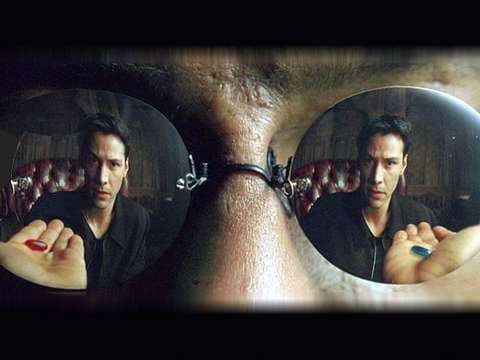
Which pill do you take?
All You Have to do is read the labels
Substances work with much better consistency than most things in our life.  In fact, the reason drugs are so enticing is that they work. Want to feel a certain way, there’s something out there for you.  Anything your character wants can be found in a drug. Confidence, creativity, strength, expansion of consciousness.  Eventually  the drugs will do the opposite that you hoped for, but while the character is falling into the pits of hell, it can feel like flying.
      "Most people don't know how they're gonna feel from one moment to the next. But a dope fiend has a pretty good idea. All you gotta do is look at the labels on the little bottles." ~ 'Bob’ from Drugstore Cowboy.
You got to believe Dillon read Junky 
before playing Bob on Drugstore Cowboy

Perceptions and Prose
When characters uses substances, perceptions are altered, and this is where your prose should change. First person point of view will certainly change the most, followed by third person limited. The deeper you are in the POV the more affected the prose will be. 

Make the sentences reflect the substance: Drunkards will have big, bold dreams, or violent impulses. Any good drunk is always telling you how much they love you or how much they hate you.  Heroin will make you feel soft and warm, like a return to the womb where everything is beautiful and has its place; the ants in the grass are just doing their thing. Cocaine will have your brain and tongue electric with tangential philosophies. 

Of course, the pain of craving for and detoxing from these substances will have a visceral effect unique to the substances. Making your characters detox and crave is twice as much fun as getting them high. The possibilities are endless, and characters going through the cycle of addiction transform as much as any werewolf.

Thought patterns and Narrator Reliability.
Characters getting high will rationalize insanity until their choices seem perfectly reasonable and actually preferable. Their internal dialogue will be filled with lies. What's more fun writing than that?

Similar to this, there’s tons of options to hide an addicts true intent with behavior that may seem contrary to expectations.  Addicts lie, they deny, then they die. 

There’s a great passage in Michele Miller's upcoming novel (and ABNA semi-finalist), Lower Power, where a craving crack cocaine addict can’t find a way to afford any drugs so instead he goes to visit his son. As we travel alongside him, we think this could be a redeeming quality, until he steals the very  necklace he gave his son from around his neck to pawn for crack money. That’s verity. Parents get high everyday by selling back their kids Xbox games to Gamestop so they can get a 5 dollar crack rock.

Surroundings
Unlike the pits of hell for murderers and rapists, there are no fences in the pits of hell  for addicts, for if an addict tries to climb out of their pit of hell, another addict grabs them by the ankle and pulls them back down.  Want to put your character around some nastiness and see how they respond, send them to a crack house or a dive bar. It’s a pot of bubbling madness in there, and your character's madness is sure to boil right out of them just the same.

So there’s some thoughts. Not sure if anyone is listening as I look around the table, but that’s okay, this sharing is important for me and I'm grateful for the chance.  I’d love to write a post on how to write someone newly sober since sobriety to me has been stranger than any fiction or any addiction. It took a lot more courage to live stone cold sober 24 hours a day than to clutch onto that 40 ouncer like it’s my baby bottle. 

For a great read on a newly sober person navigating reality filled with some wonderful humor, try “Unwasted: My Lush Sobriety” by Sacha Scoblic.

For a great story on addiction that I think will blow your mind to pieces, check out

$2.99 for kindle 
$6.65 paperback


Thursday, June 27, 2013

21 Years Sober But Getting Drunk On Inspiration

If my child had been born on the last day I took a drink, that child would turn 21 years old today and able to drink legally. I am reveling in that irony. It’s a whole Ouroborosy kind of thing of a snake eating its own tail.


21 years clean. Rather than try to write anything new since I have sounded off plenty on the topic here, I am going to highlight a few of the most recent inspiring articles I have read.

When it comes to Chasing the Dragon for years and then trying to stay sober, I was blown away by this article from Writer Matt Haig. His post, “Reasons to Stay Alive” nailed the seemingly 'un-nail-able' points on both staying sober and staying alive.  Here’s number 10.

10. You will one day experience joy that matches this pain. You will cry euphoric tears at the Beach Boys, you will stare down at your baby daughter’s face as she lies contentedly asleep in your lap, you will make great friends, you will eat delicious foods you haven’t tried yet, you will be able to look at a view like this one and feel the beauty, there are books you haven’t read yet that will enrich you, films you will watch while eating extra large buckets of popcorn, and you will dance and laugh and have sex and go for runs by the river and have late night conversations and laugh until it hurts. Life is waiting for you. You might be stuck here for a while, but the world isn’t going anywhere. Hang on in there if you can. Life is always worth it.

Tattoo it on your arse, and then read the whole thing. Do it. Do it. Here it is: "Reasons to Stay Alive"

 As for running to chase new highs, I'm inspired by Caleb Daniloff, my most favorite drunken runner and author of an incredible book on running and sobriety called: “Running Ransom Road”. Here's a paragraph from his most recent article:

"after 15 years of chronic drinking and drug use, I found running to be a powerful healing agent — a therapist’s couch, confessional and pharmacy counter rolled into one. The head space that opened up during my predawn runs allowed me to embrace all the people I used to be, even the ugly ones, replacing callousness and narcissism with humility and clarity. My apologies to those I’d harmed were all drafted at six miles per hour."
 
This is from a series of New York Times articles on Endorphins as addictive. Check Them Out Here. The article from Jamie Quatro is simply Divine and to chunk out an excerpt would be to blaspheme the Old Gods and the New. Her article is now my answer to others who ask why I run. (Even though, if you have to ask, I can’t give you an answer that will make sense.)

Finally, as I scribble a few words down, sometimes just to see if a pen works, other times to write a novel and try not to suck, I’m inspired by Chuck Wendig. His writing tips speak a language that none can replicate. If you are a writer and aren't following his blog, you probably just got dial-up internet yesterday. His poetic quips will be studied by future generations when all of us are dust and ashes.


49. No, Really, You Have No Excuses

Other people have done what you’re claiming you can’t do. People who have it worse. Or who have more kids. Or another job. You want to ask me how you do it: you just do. You extract words like teeth. You spill them on the table like dice from a Yahtzee cup. You carve a path through the words, through the story, through the industry with a machete made from your own desire and doubt, carved from your femur and scented with your blood. You write even a little bit a day, you’ll get there. You can’t manage that, then don’t even talk to me. Whaddya want me to do? Shove my hand up your ass, work you like a puppet? You wanna write, write. Otherwise: shoo. 

Wonderful words whatever your goals might be. (Read the whole thing)

All I got for today. 21 Years clean but getting drunk on this kind of inspiration.

Wednesday, June 12, 2013

Running Triggers and Running Withdrawals

I have now gone 18 days with no running. My streak began at 11:01 am on Saturday, May 25th  and I have not logged a single mile since.  Nothing.  Closest thing was dashing across the street so as not to be hit by a car. But nothing that will register.
My full goal is to make it 4 weeks.
I want to reset my legs. To start over. To try and melt away all the damage I did by training for 3 marathons in 16 months, which for some runners is a regular gig, but for me was an overreach.   I’m fine to lose some fitness and detrain in exchange for healing up my tendons and ligaments. I want to ‘unshred’ my  muscles which have turned to lumps of scar tissue.  It’s working, because my muscles are feeling both fresh yet at the same time ‘mushy.’ When I start running again, it will be to train for the New York City Marathon in November. Lots of time.
I have started biking, and hope to continue. That’s provided some relief, but the urge to bust out on a full run is ready to overwhelm me.
I am being triggered daily.

As a recovering alcoholic and addict, talking about triggers has been part of my life for years. This now relates to running since I am trying to abstain.
-Stepping outside and hearing the silence of an early morning; this begs me to run. 

-The seduction of a sunny, 68 degree, low humidity day;  this begs me to run.
-When the time of the week rolls around when I always run; my brain begs to run.
-When I lace up an old pair of running shoes, which, like most runners, are my everyday walking around shoes; my legs beg to run.
-When I’m feeling any emotion that I know could be sweated out, when I want to rearrange my mood, when I want to unscramble my brain, when the need comes to refresh my spirit; my soul has a craving to run.
Even after 20 years of abstaining from substances, my addiction is like a phantom limb. I have completely accepted that I can't use alcohol or drugs again (and live to tell about it) yet I can still feel my addiction inside of me.

Seeing beer makes my mouth water. I can’t help it. In fact, my mouth watered just writing that sentence.  Drinking plain Squirt makes my phantom addiction expect the aftertaste of Gin. When I watch a movie where someone is getting high, my nose burns and my spine feels an electric jolt. 
And actually, still having these sensations helps. It reminds me I am still sick. I’ve learned to handle these triggers and cravings. It’s as much a part of me as blinking.
As for running, I can’t say how long I can live with these triggers. I have a date circled of June 22nd when I will be in Chicago, and would love an early morning run along the waterfront.  I haven’t had the running high for a bit, and the withdrawals are daily. Like a heroin addict resting his veins, that first one is going to feel so good.  Of course, many heroin addicts overdose and die the first time they go out and use Heroin again after a long break. Their tolerance is not what it used to be, and they forget that they can’t handle it. What used to get them high, now kills them.
I’m hoping my memory of what kind of runs I can handle is there. If not, I will bust out and try to do a 20 miler, and the vicious cycle will continue. There are worse ways to die.

Monday, November 26, 2012

Feedback On '9 Reasons Recovering Addicts Run'

Yes, I'm an egomaniac with an inferiority complex, so I love to get feedback on my posts. No article has received as large a response as the post:   '9 Reasons Recovering Addicts Run'
 
The post made it in Predawn Runner as one of his highlights of the month.  I was contacted by a 1/2 way house who had used the article for a group therapy session, it was posted on 'Treatment Talks' facebook page, and Yahoo bought it off of me for the price of a 12 pack of soda water. (For the article on Yahoo, click here)

Ironically, I wrote the article in a manic rush since I was about to read "Running Ransom Road" a book which traces a self-described "ex-addict's" journey through his past through marathoning. I'd been wanting to write on the subject for quite a while, and didn't want to unconsciously plagiarize the book, so figured I should get it out of the way. Yes, I typed away Jack Kerouac-style minus the Benzos.

Before I brake my arm patting myself on the back, here's a response I received from a runner/recovering addict who had written from the same experience: (posted here with permission of the author.) To me, it shows how pervasive running is as an outlet for those with a history of addiction,

It's a touching read with some very sharp and very personal observations.  (Thanks Eric)

A Running Addiction 
Eric Stanley
A while ago I found myself in the middle of a dusty trail marathon.  The forecast had said the day’s high was going to be 87 degrees.  It was currently approaching 90 and not yet 10:00 AM.  I had run the first half of the race well within my capabilities… far beyond, in retrospect, what conditions allowed.  I was on my hands and knees on the side of the trail vomiting watered down Gatorade, dully aware I was not sweating anymore and was getting goose pimples. 
The occasional runner would pass and shout a word of encouragement.  One asked if I was alright.  I mindlessly waved him off and allowed him to continue his own race… it was the least I could do.  Standing up I experienced tunnel vision, and a contrasted view of the world where the brights were too bright and the darks were too dark.  I made the decision and began heading back to the last aid station.  My race was over. 
When I made it back to the aid station I found out that the staff I took for granted when I filled my water bottle, was made up of high school students with no knowledge of what an unhealthy runner looked like, no first aid skills, and no way to communicate with “real” race officials.  Instead, I was greeted by cheers since I was the first person returning from the out and back section of the course.  I explained I was dropping out, and needed help.  I was rewarded with blank stares and directions on how to get back to the starting line. 
Cutting the course where I could, stopping to relieve myself when I was forced to, I managed to walk the 6 miles back to race HQ.  By that time I had recovered some, and was greeted with confusion and disbelief when I refused to cross the finish line and explained I had dropped out.
This story is familiar to some; you’ve read other reports of races gone bad.  Some of you have experienced similar occurrences in one form or another for yourself.  This is where, based on the title of the article, you expect a moral to the story, how I love running, how much running means to me, what I learned, how I got better.
I’m sorry to disappoint.  It was a clever title to make you read this far.
Although this is a true story, it doubles as a metaphor for my life.
I’m a recovering addict.
Two years ago my life had spiraled out of control.  Issues I had lived with most of my life had come to a head, and I was on the verge of losing my wife, my children, my home, my career.  Anything that had any value in my life was an eye blink away from being gone.  Forever.  And like a strained hamstring, or a tight IT band, that I needed to last for one more race, I hid it.  I hid it all.  I buried a damning dysfunction behind false smiles, trivial conversations, and the “healthy” habit of running.  All the while I planned how I was going to get my next fix.
I was on my hands and knees puking the guts out of my life, waving people on, telling them I was OK.  My smile was so sincere, they believed me. 
So, what happened?
I was saved. 
Not in a biblical, spiritual, Southern Baptist Bible beating, slap on the forehead, born again saving.  Although I’m sure there is a bigger plan in all of this.  I was lucky enough to have a wife who saw me at my lowest low.  Who took the worse psychological abuse I could dish out.  Who saw me as someone who apparently did not care about anything, and she decided there was something worth keeping.  She saved me.  Don’t get me wrong, I’m not married to a saint, I’m not that lucky, but through a perfect storm of issues and resources, I was lucky enough to have a wife who cared enough to try to understand.  I can never give her enough credit.
I was given an ultimatum and a choice.
I chose to reach out and take the hand that was offered.  With my wife’s help I was able to find a group of people who were able to help start getting clean.  With a lot of really hard work, a strong support group, and a wife who loves me, I’m sober and healthy.
It’s not a happily ever after story.  There have been trials and tribulations.  There have been relapses and setbacks.  I’ve reached out to people who I thought were supposed to help and was rebuffed, and referred away.  By the time this is printed I will have a year sobriety.  My wife and I have a strong relationship that is healthier and better than ever; I’m a better father and a better employee.  But it’s a lot of work, and in some ways and at some times it is a daily struggle.
There are a number of elite and sub-elite runners, marathoners, and ultra-marathoners who are recovering addicts.  These athletes are normally the low-key men and women who are quick with a wave and a smile, can sometimes be within striking distance of a historic finish and are able to fade willingly into anonymity.  Running attracts addicts.  Look it up.  Once you get past all the pat-myself-on-the-back articles about being a “running addict” you’ll find hundreds of resources dealing with running as a therapy for addiction recovery, why addicts run, physiological and psychological benefits of running for addicts, entire programs set up to reach out to addicts to use running to help get them clean.
Why?  Lots of reasons.  At my worst it was an escape.  At my not quite worst it was an exercise of control – addicts like to have control, at least the illusion of it, and running provides the perfect outlet for exerting control in an aspect of your life.  You can make it all about charts and graphs, times and goals.  You can literally force your body to do things that it should not be able to do – run 16 miles with the last 4 at 10K race pace.  And addicts can get off on that.  For some, depending on the addiction, it can actually give them an outlet to delve deeper into their junk, to medicate without the drug of choice – then to medicate again with it.
In recovery running can be a therapy.  It can be a time for meditation, for prayer, a stress reliever.  Scientifically speaking endorphins and adrenaline can take the edge off of chemical dependencies or physiological behaviors.  Spiritually speaking it gives time to think, reflect, pray, commune, discover a meaning for your life, or any of a number of benefits that can be valuable to a person.
All I know is this.  Running alone is not a cure.  Running by itself cannot, by the sheer nature of its potential, be the sole answer.  Has it worked for individuals?  Sure… but so has cold turkey.
Think of your absolutely worst running experience.  Think of your lowest low.  Your hardest hurdle.  The biggest wall.  The most terrible cramp.  The career-ending injury.  Heatstroke.  Dehydration.  Hypothermia.  There are people out there, people you know, who are suffering much much worse… because someone they know has an addiction.  That is the suffering I caused my wife.
                For anyone reading this who needs a word of encouragement.  You are not alone.  There are people out there who want to help.  You are not the worst, not the first, not the only.  If you are curious about my story, or just want a sounding board for your own issues, I’m willing to listen.  And I’m always up for a run.
                Eric Stanley
             
ericstanley1718@yahoo.com
                Sober since October 18th 2011.

Wednesday, November 14, 2012

Altered States & Symptoms Of Inner Peace


 We've all been there; tired from the day, wanting to just sit in front of the TV, eat, stay indoors, and turn to jelly in front of our favorite show - or the alarm rings at 5 am and the urge to stay in bed and fall back asleep sucks at our soul -  But if we can just get ourselves out the door and run some miles, we know we will return with some energy.  A run will leave us fully revitalized with energy and mental clarity.

Running can put you in a diametrically opposed state of being, delivering you from being tired, angry, discontent, and flip these feelings into something much more glorious and life-affirming.

Angry or depressed?  Once you 'run it out', the emotions spin from your body and you find yourself unburdened from your stress.

Yes, we are Chemically Dependent on what running does to our bodies, minds, hearts, and souls.

In fact, most of us have come to rely on running as our mood stabilizer, our energizer, and don't just reap the benefits, but demand them once we know their full capabilities.

Compare this to the another form chemical dependency, Alcoholism, which also puts one in an "altered state", but unlike running, it ultimately leads to the exact opposite of the desired effect. 

Check out the following poem which describes this insidious nature of addiction. 

We Drank
We drank for happiness and became unhappy.
We drank for joy and became miserable.
We drank for sociability and became argumentative.
We drank for sophistication and became obnoxious.
We drank for friendship and made enemies.
We drank for sleep and awakened without rest.
We drank for strength and felt weak.
We drank “medicinally” and acquired health problems.
We drank for relaxation and got the shakes.
We drank for bravery and became afraid.
We drank for confidence and became doubtful.
We drank to make conversation easier and slurred our speech.
We drank to feel heavenly and ended up feeling like hell.
We drank to forget and were forever haunted.
We drank for freedom and became slaves.
We drank to erase problems and saw them multiply.
We drank to cope with life and invited death.

*Another favorite 'poem' of mine is called "The Symptoms Of Inner Peace," and I am sure many runners will be able to relate to sense of contentment described below. 


The Symptoms Of Inner Peace

Be on the lookout for symptoms of Inner Peace. The hearts of a great many have already been exposed to Inner Peace, and it is possible that people everywhere could come down with it in epidemic proportions. This could pose a serious threat to what has, up to now, been a fairly stable condition of conflict in the world.


Some signs and symptoms of inner peace:

- A tendency to think and act spontaneously rather than on fears based
    on past experiences.

- An unmistakable ability to enjoy each moment.


- A loss of interest in judging other people.


- A loss of interest in interpreting the actions of others.


- A loss of interest in conflict.


- A loss of the ability to worry (this is a very serious symptom).


- Frequent, overwhelming episodes of appreciation. 


- Contented feelings of connectedness with others and nature.


- An increasing tendency to let things happen rather than make them happen.


- An increased susceptibility to the love extended by others, as well as

    the uncontrollable urge to extend it.

WARNING ! 
If you have some or all of the above symptoms - please be advised that your
condition of Inner Peace may be so far advanced as to not be curable. If you are exposed to anyone exhibiting any of these symptoms, remain exposed only at your own risk.
- Saskia Davis -

*I first read this over 20 years ago when I was experiencing nothing like 'Inner Peace', but the words stuck with me, and I've been searching to experience the symptoms ever since.  Thankfully, some of the symptoms have appeared, and, in fact, are most evident when my running is at its peak.

I sure hope it's contagious.  
(Symptoms of Inner Peace Website)


Thursday, September 27, 2012

"Running Ransom Road: Confronting The Past, One Marathon At A Time"


As a drinker, I mistook the presence of fear for cowardice. I was terrified of conflict; something both amplified and brought on by the bottle. Even after I quit drinking, I stayed scared, the fear ingrained in my fibers. I began to believe this was who I was, born afraid. It took years to realize that courage isn’t the absence of fear. It’s being scared and acting anyway. No, that’s why I ran these marathons. For what they represented: the physical manifestation of going through something, not around it. I was looking at myself with a raging, surging heart, and not turned away. Fear makes me human. Running allows me to act.  ~Running Ransom Road, Caleb Daniloff

More than just a physical triumph, running a marathon is a way to gain mental clarity, to seek a spiritual awakening, to experience emotions in a raw state, and to simply chase the dragon down and feel the endorphin high of moving forward for 26.2 miles.  When training is at its peak, there is little deviation between the physical act of running and the interpersonal battles against doubts and fears and very often, lingering demons from your past running behind you and nipping at your heels.

So, if you could run a marathon in every city that formed who you are and push your body into a spiritual state and ready vessel for all the memories, trauma, and painful breadcrumb past you left trailing behind, and could breath it all in during a 4 hour  run, what kind of insights might this bring?

This is what happens in ‘Running Ransom Road, Confronting The Past, One Marathon At A Time,’ by Caleb Daniloff. The author visits marathons located in key locations related to his history of addiction; Boston, New York, Moscow, and his place of birth, Washington DC, among other races. The book shoots back and forth from past to present, linking the author's current thoughts and goals of running to his past life of self-destruction. The author recounts and reflects on his alcoholism, fighting through an understanding as his legs fight to keep moving towards the finish line.  Yes, he is the very unlikely marathoner, considering the extent to which he dedicated his life to drinking.  The goal is partially to break the 4 hour barrier, but also to break through to a better understanding of himself, and come to something close to peace with the wreckage of his past. 

Each chapter is a race, and we experience the intriguing mindset of the author journeying through 4 marathons, and three races in an 18 month period

What is wonderful about the book is that Daniloff is a gifted writer first, or at least that’s what shines through, and his personality is one which has all of the interesting jagged yet fragile edges of an addict, and with all the determination and stubbornness of a distance runner.

The metaphors he uses are tremendous, and I am thinking that a handful of writers could make a living off the scraps of metaphors Daniloff has come up with but never used.

And there isn’t a marathoner out there of all speeds who won’t connect with his writing descriptions.  I’ve always felt if running could be fully described, then it wouldn’t be running but something much less, as it’s effects escape meaning that words can give. Daniloff describes the joys of running in a spectrum of phrases that came close, and more importantly, it was clear that he “gets it”- as running elitist as that sounds.  The near stream of conscious running descriptions rival those of any running book, and are fresh, subliminal and poetic.

In an early passage, Daniloff describes the primordial experience running can bring:

“Some runs, I got to breathing so deep and full, I was sure I was pulling oxygen and light into some dusty, primordial corner, where perhaps gills once floated open and closed.  That sensation, coupled with the rush of my feet, filled me with a sweet, swooning lightness and the feeling that I could run anywhere.”

On Morning Running:
"I never pictured myself an evening runner. The thought of changing into shorts after eight hours at my desk, several meals coating my belly, the day’s baggage clinging to me like a rucksack, seemed onerous. But worst of all, sleeping on that shaken snow globe of endorphins seemed like such a waste."

Evening Runs:
"Running in the evenings feels different. Things are winding down but there’s a thicker, crowded, louder energy, as if the world isn’t’ yours alone: everyone’s claimed a piece and you’re just looking for a free outlet to plug into."

All of this, but you’ll also find the mundane yet near universal experience of navigating a pee in the bushes at the beginning of a marathon, the importance of body-gliding one’s nipples, and the constant runner’s math all of us do trying to push our body past the finish line in some arbitrary time trying to prove we’re worthy.

Yet, this is certainly not a technical piece on running.  Not until the end, in fact, does the author realize the importance of keeping an even pace through a marathon to get his best result (when he speaks of ‘banking’ time, you can’t help but scream “no, don’t do it!)  But I think this is what keeps the novel honest and raw.  Once you start getting into lactate acid threshold levels and tempo runs and marathon pace runs and Yasso 800-ing and McMillan-ing, something is partially ruined that can’t be gained back. The author would turn from garage-band runner into an overly produced piece of work. How different all of our runs might be if we never bit the technical running apple.

Rather than a lesson on how to run, it’s an inward, honest self-reflection of a private world that is fragile, longing for something different, yet, as he describes in one interview “in love with this alienation” that addiction brings.  The sense of loneliness continues even in his recovery, where he does not share deep experiences with sponsors and other recovery folks, and, in fact, laments changing relationships with past alcohol-imbibing friends. It is a solo descent into his addiction as well as a solo ascent to recovery. At the same time, there’s the silent connection to both runners and the spirit of the run itself.

This book spoke personally to me, as a marathoner and recovering addict. (Click here for my post on Why Addicts Run) Scene after scene, I felt fortunate the author could describe my own experiences to me in a poetic way. It helped that I got all of his musical and literary references.

I particularly enjoyed the Boston and New York marathon stories, one I have ran and the other I am preparing for, but the Moscow experience of doing a marathon is one not to be missed.  Cultural differences do impact marathon aid stations.

Since this book speaks to me so uniquely, the question is then how universally will it be enjoyed by at least the running crowd first, by those looking for a recovery from addiction memoir perhaps second, and finally, the population of readers at large.   The honesty, the writing, the paragraphs which are enjoyable by themselves and not just because you wanted to breeze through them hoping the next moment must be the payoff, all make it a book of universal appeal. It is artfully crafted yet not dribbled with sentiment the way many addiction memoirs seem to be.

 If you’ve read a ton of running books, you may not have read one like this, and if you’ve read a ton of self-discovery books, where there’s a final AA speech in front of a crowd, and you get your token, and then your spouse appears at the back of the room, and everybody cries, and true love lasts forever, and a REM song plays.  No, this is not the one either.  Illuminations and epiphanies sprinkle down during runs, and they are received with a questioning uncertainty of one who is always running to figure out who they are.  This is what life is, this is especially what recovery is, and as the author states,  “No longer do I run from my demons, but with them.” but the run must go on, since, “ you never outrun your demons, but if you maintain forward motion you might just get them to tire a little.”

Author Photo

In gaining his sobriety, The author makes it clear that he didn’t connect with the 12 step program of Alcoholics Anonymous, but does not disparage those who follow this path one bit.  Two thoughts on this (and excuse the fairly esoteric tangent):

One is, those in AA, I believe, are often way too quick to disregard those who don’t’ connect with aa and lump them together with the vast majority of alcoholics who simply want to keep drinking and will point to any annoyance to justify their continued self-destruction. This does not always have to be the case.

Secondly, the author has worked the 12 Steps.   Yep, it’s all there.  The unmanageability, and powerlessness of step one, the turning his life over to a new order and higher power of 2 and 3, the self-examination and personal inventory  Admitting to God and to himself the nature of his character (often during a marathon run) of steps 4 through 9, and the spiritual awakening that concludes in step 12.  The author speaks to this when he states “every time I run, I’m having a conversation with my purest self, my moral inventory on full display.” And he calls running his “daily prayer service, the marathon my vision quest.”

With this book, the author is carrying on the message to others.  As for going to AA meetings, if you can tell me which step describes how one must attend such a formal meeting, I’ll buy both you and I a drink and throw my own 20 year coin into the wishing well.

So, Mr. Daniloff, here’s your 15 year chip for working the steps, and here’s your medal for writing perhaps my favorite book on marathoning.  It is certainly the one with the most dog-ears on my paperback copy, and definitely the one which spoke most personally to my experience as a marathoner constantly running to stay just a few steps faster than the addiction demons nipping at my heels.

My Dog-Eared Copy


To Exist In the Face of Suffering and Death and Somehow Still Quit Drinking - Addiction & Recovery Themes in the Music of Florence + the Machine

When Florence Welch’s talents propelled her to early stardom, her mother made a speech at her 27th birthday, pleading for her friends to kee...